The Price Tag of a Dream: Africa’s Uneven Journey Toward Free Education for All
Education is the key that unlocks the golden door to freedom. These words by George Washington Carver remind us that education remains the most powerful tool for overcoming inequality and achieving both personal and national growth.
Across Africa, this belief has guided generations of reformers and policymakers who see schooling not as a privilege but as a promise; that every child, regardless of background, should have the chance to learn, to aspire and to build a better future.
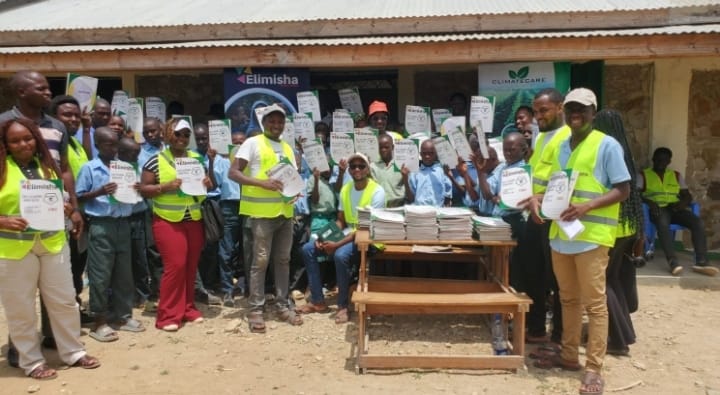
Our visit to Kinango earlier this year (2025) - a remote settlement at Kwale County in Kenya’s coastal region, brought this truth home. Children there face challenges that go far beyond tuition. Hunger, lack of transport, lack of water, insufficient learning materials, school uniform and, for many girls, early marriages and the absence of sanitary supplies continue to drive them out of schools.
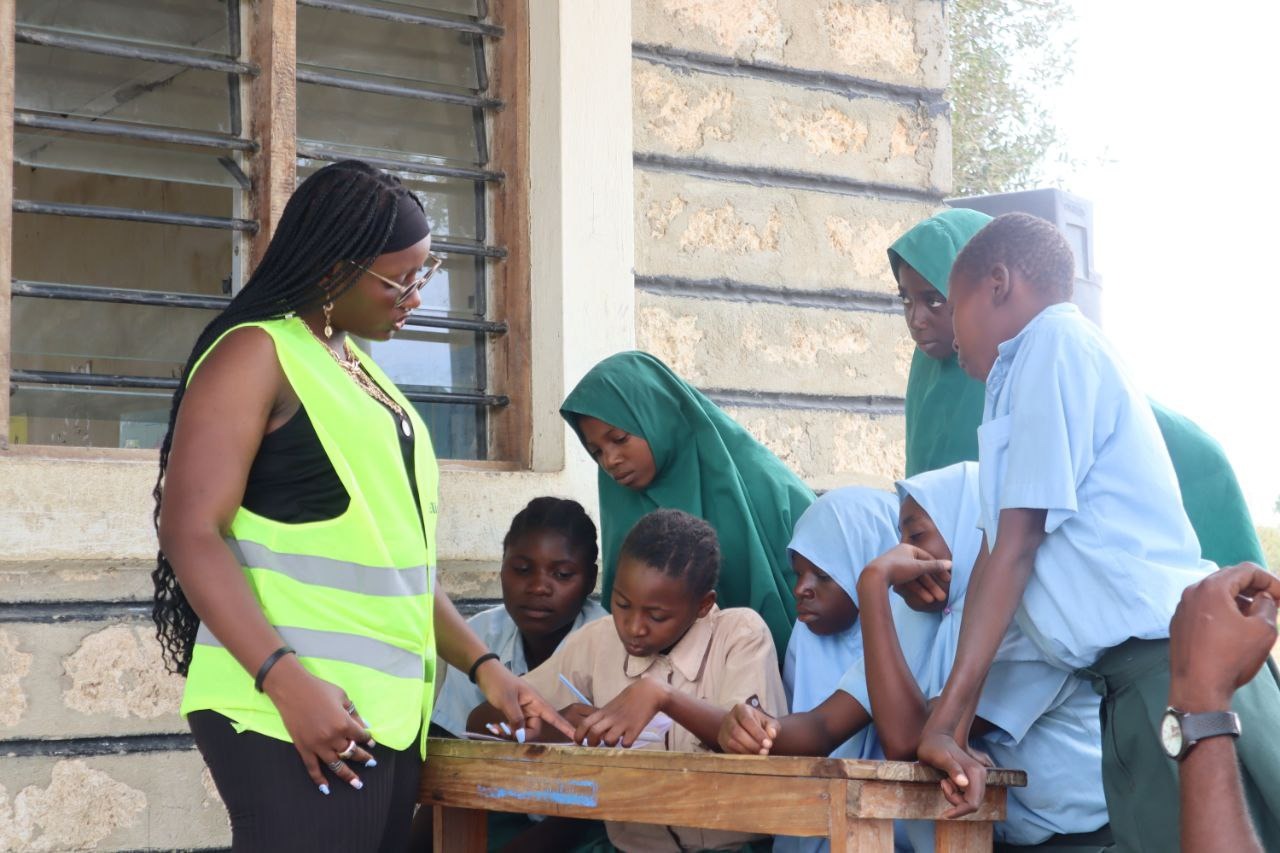
These are not abstract problems, they are real, daily barriers that quietly erode the meaning of “free education.” What we saw reminded us that keeping children in school is never just about paying teachers or buying textbooks; it is about preserving dignity, hope and opportunity
Kenya’s Unfinished Resolution
Kenya’s journey offers a sobering counterpoint. The government abolished primary school user fees in 2003 through the Free Primary Education (FPE) program, a landmark decision that led to an immediate surge in enrollment. Within the first year, public primary school enrolment jumped by more than a million pupils. Today, UNESCO and World Bank data place primary completion rates near or above 90 per cent.
Building on this, the government launched Free Day Secondary Education (FDSE) in 2008, covering tuition for day schools and driving transition rates from primary to secondary beyond 80 per cent. Yet completion remains a challenge: studies indicate that about one-third of secondary students still fail to finish. Rural poverty, teenage pregnancy and the hidden costs of schooling continue to hold many back.
The story becomes even more complex at the tertiary level. Kenya’s gross enrolment rate in higher education stands at just over 10 per cent, meaning that only one in ten young people of university age is enrolled. In 2023, the government introduced the New Higher Education Funding Model (NHEFM), replacing block grants to universities with a system of direct student scholarships and loans based on means- testing. While designed to promote equity, the model has sparked anxiety among students who fear being forced to choose courses based on cost rather than passion. The 2024/25 budget, according to policy briefs, could only support about 17 per cent of first-year entrants, a sharp reminder that cost-sharing still defines Kenya’s education system.
This evolution, from President Mwai Kibaki’s view of education as a public good in 2003 to a more market-oriented, cost-sharing approach two decades later, illustrates how ideology can shape access. What began as a promise of equality now risks becoming a contest of affordability.
A Continent of Promise
Across Africa, governments are making significant strides towards making education more accessible. In April 2025, Namibia announced that from 2026, tuition and registration fees would be fully subsidized at all public universities and government vocational colleges, a historic expansion of its already free primary and secondary schooling. The move, hailed as a “revolution in access,” aims to remove one of the final financial barriers for young Namibians.
Ghana’s Free Senior High School policy, introduced in 2017, continues to stand as one of the continent’s boldest educational interventions. By eliminating tuition and related school charges for students in public senior high and technical institutions, the policy has allowed over a million Ghanaian learners to progress beyond basic education. The Ghana Education Service reports that enrolment in senior high schools has risen from roughly 813,000 in 2016 to over 1.3 million by 2023, even though the system still wrestles with overcrowding and delayed funding.
Rwanda, too, has been a quiet successful story. Having abolished public primary school fees in 2003, the government extended free education to lower secondary in 2006 and upper secondary in 2012, forming the now well-known “12-Year Basic Education” program. Primary enrolment rose from 73 per cent in 2000 to more than 95 per cent by 2019, with clear gains in gender parity and rural access. The World Bank and UNICEF both credit Rwanda’s capitation grant system, which transfers funds to schools per enrolled child, for maintaining this progress.
Burkina Faso also joins this list of reformers. In April 2025, President Ibrahim Traoré’s administration announced that education would be free from primary school all the way to university. The new policy also provides free textbooks for primary students, making Burkina Faso one of the few African nations to commit to universal free education at all levels. Supporters see it as a transformative step that could open doors for thousands of rural children who have long been excluded from learning due to poverty. Critics, however, warn that the initiative’s ambitious scope may strain the country’s fiscal capacity, a familiar concern for many African nations pursuing similar paths.
Taken together, these countries symbolize a continent increasingly willing to translate the right to education into actual policy. Their progress demonstrates that when governments act as enablers, access widens, social mobility improves and the dream of equality comes closer to reality.
The Cost of Free Education
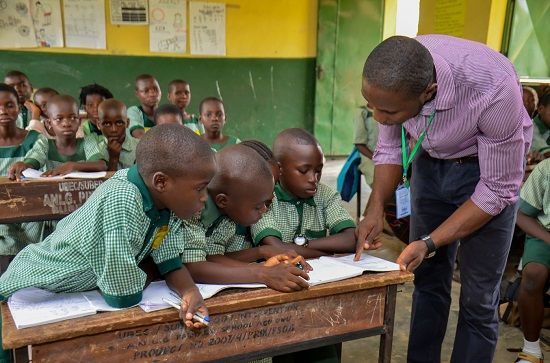
“Free education” in much of Africa means the removal of tuition fees, not the total elimination of costs. Uniforms, meals, transport, stationery and exam fees still burden families. For parents in communities like Kinango, where incomes are uncertain, even these seemingly small costs can make schooling impossible.
In Ghana, despite the Free SHS policy covering meals, textbooks and examinations, funding inconsistencies have led to periodic shortages and fluctuations in enrolment. Data from the National Development Planning Commission show that the senior high school completion rate fell from 68 per cent in 2021/22 to 58.7 per cent in 2022/23. This suggests that accessibility without sustainability can erode earlier gains.
Namibia’s forthcoming free tertiary education policy faces similar questions. The government estimates it will spend about N$5 billion annually to sustain the subsidy, a significant fiscal commitment. Observers note that success will depend not only on funding but on improving quality and infrastructure, especially in rural regions where many students still lack basic learning conditions.
Kenya, meanwhile, continues to devote nearly 28 per cent of its national budget to education, signaling a strong commitment to the sector. Yet with the state still debating cost-sharing models and capitation delays, the contradiction remains: education is declared free, but families still pay.
From Slogan to Structure
To make free education meaningful, African governments must move beyond policy announcements to structural change. That means hiring more teachers, building better schools, ensuring that girls have access to sanitary products, and that no child walks ten kilometers to class on an empty stomach. It also means aligning tertiary education with labor market needs so that access leads to employability, not disillusionment.
Equity must be at the heart of these reforms. If cost-sharing persists, it should be progressive, the poorest families fully subsidized, the wealthier contributing modestly. Free education must not become another privilege that benefits the urban and already advantaged.
Conclusion
The progress seen in countries like Namibia, Ghana, Rwanda and now Burkina Faso should not be understated. Each represents a genuine effort to make education not just a right on paper but a lived reality. Kenya’s story, in turn, reminds us that sustaining that right requires political will, economic discipline and a focus on quality, not just quantity.
In the classrooms where Africa’s future lies, the promises of free education will matter only when every child, whether in Kinango, Kigali or Ouagadougou, can sit, learn and dream without a price tag. Until then, Africa’s education revolution remains a work in progress, one that must be continuously nurtured, funded and fiercely protected.
Wairimu Kariuki
Author